Skip to content

THE ESTEVANICO STORY

A journey across worlds.

From Azemmour to North America, Estevanico’s life opens a window onto a connected—and deeply contested—sixteenth-century world.

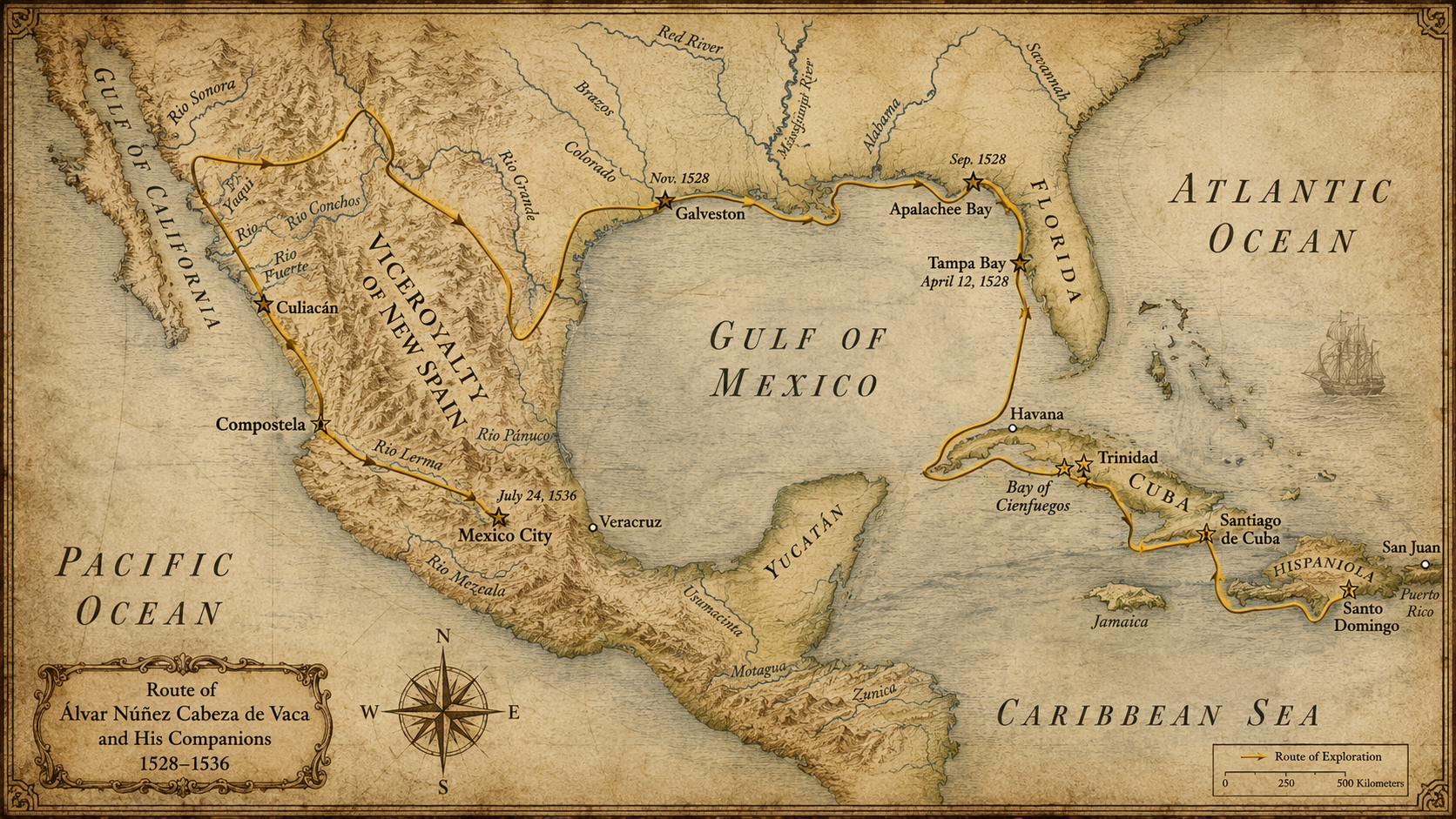
Map of Estevanico’s journey from the Foundation collection

Illustrative map from the Foundation’s collection. Historical routes are reconstructed from incomplete records.

More than a name
in someone else’s account.

Estevanico, also known as Esteban de Dorantes, was born in Azemmour, Morocco. Enslaved by Andrés Dorantes, he travelled with the Narváez expedition and survived its disastrous passage through the Gulf of Mexico.

Alongside three other survivors, he crossed Indigenous homelands before reaching Spanish settlements in 1536. In 1539, he travelled north with the reconnaissance expedition of Fray Marcos de Niza toward Cíbola.

His story involves enslavement and empire, but also language, knowledge, and the Indigenous communities whose presence is essential to understanding these journeys. Much of what survives was written by others. That distance between a life and its record is where inquiry begins.

Read the National Park Service account
A FEW POINTS IN A COMPLEX HISTORY

AZEMMOUR

Moroccan beginnings

A life rooted on Morocco’s Atlantic coast.

1527–1528

An Atlantic crossing

The Narváez expedition and its disastrous aftermath.

1536

Survival and encounter

Four survivors reach Spanish settlements after years of travel.

1539

The journey to Cíbola

A northern expedition, and a history still studied today.

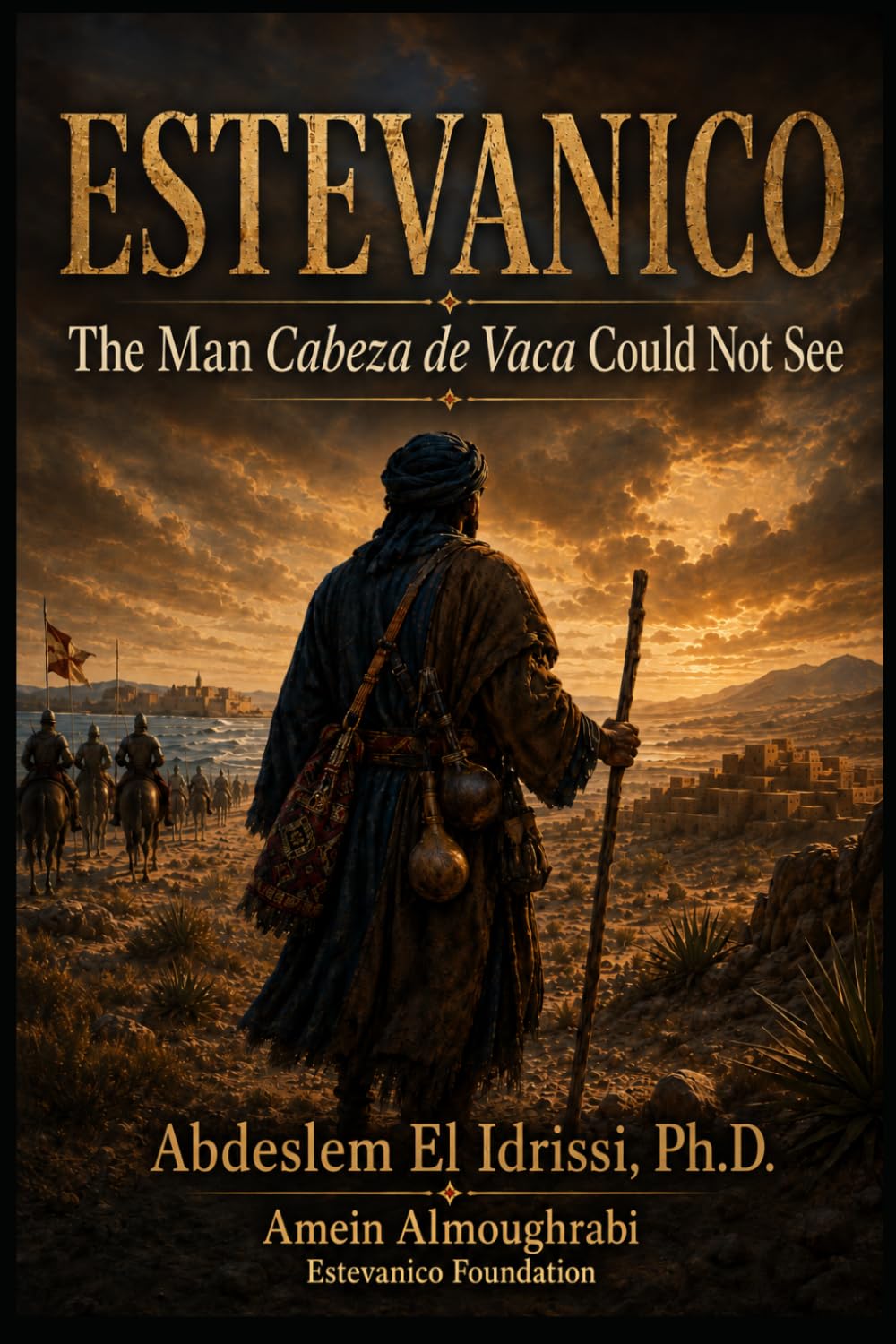
Cover of Estevanico: The Man Cabeza de Vaca Could Not SeeA life reclaimed through scholarship.

THE NEW BOOK · SEPTEMBER 2026

Estevanico.
A story that deserves
to be seen.

The Man Cabeza de Vaca Could Not See

Dr. Abdeslem El Idrissi & Amein Almoughrabi

An exploration of survival, enslavement, translation, and the Indigenous worlds that shaped an extraordinary journey across North America.

396 pages · English · Paperback & Kindle